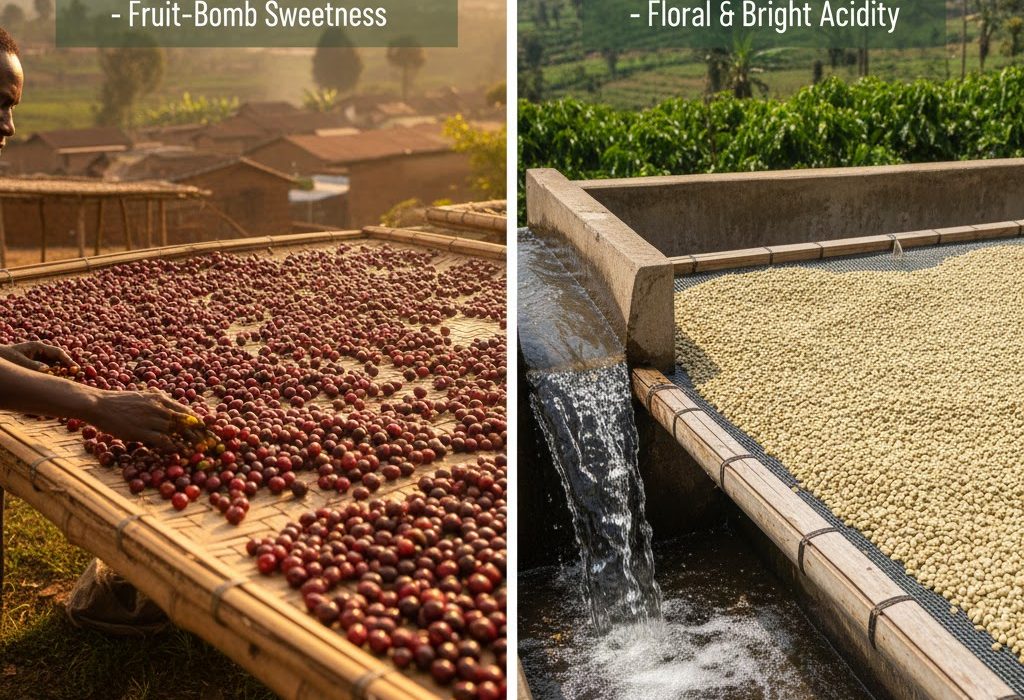

You’ll often see “Natural” or “Washed” printed on a bag of Ethiopian coffee. But what does that actually mean for the flavor in your mug?
In Ethiopia, processing isn’t just a mechanical step; it’s an art form that defines the final character of the bean.
The Natural (Sun-Dried) Process
This is the traditional way. The coffee cherries are picked and laid out whole on raised beds to dry in the sun. The fruit flesh dries onto the seed (the bean).
- The Result: The bean absorbs the sugars and fruit flavors from the cherry. This creates those famous “fruit bomb” notes—think strawberries, blueberries, and syrup.
- The Challenge: It requires meticulous turning by hand to prevent spoiling.
The Washed (Wet) Process
Here, the fruit skin and pulp are removed before drying. The beans are washed clean and then dried.
- The Result: Without the fruit flesh interfering, you taste the pure “seed” flavor. This results in higher acidity, lighter body, and distinct floral/citrus notes.
- The Challenge: It requires abundant clean water and expensive machinery.
Which is Better?
Neither! It depends on what you like. A washed Yirgacheffe is crisp and refreshing like white wine; a natural Guji is sweet and heavy like a fruit compote.
At DAS General Trading, we ensure quality regardless of the process. Because we have deep roots in the local supply chain, we verify that our Natural coffees are dried properly (avoiding “funky” defects) and our Washed coffees are processed with pristine water. We help you curate a portfolio that balances both styles perfectly.